
I made this on a Tuesday when I had two salmon fillets in the freezer, a bunch of asparagus that was about to give up, and zero energy for anything fancy. Twenty minutes later the whole kitchen smelled like ginger and caramelized soy, and I was happily eating dinner straight off the pan.
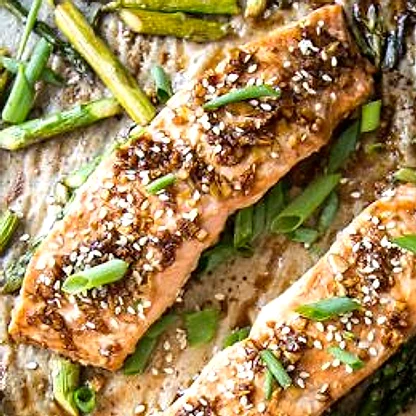
It’s the kind of meal that works for busy weeknights. You only need a handful of pantry staples, one sheet pan, and about half an hour. Salmon can feel like a splurge, but a simple marinade stretches it nicely, and this recipe is easy to scale up when you’re feeding more people.
What’s in Baked Teriyaki Salmon and Asparagus?
The sauce is the star here. Gluten-free tamari (or regular soy sauce) brings the salty, savory base, while maple syrup or honey adds the sweetness that gives teriyaki its glossy finish. Rice vinegar adds a little brightness so the sauce doesn’t feel heavy. Fresh garlic and ginger bring the aroma, and toasted sesame oil adds a nutty depth that makes the whole thing taste like takeout. The salmon soaks up that flavor while it bakes, and the asparagus picks up the sauce and roasts until its edges turn slightly crisp.
Budget-Saving Tips
- Buy salmon in larger family packs and freeze the fillets individually wrapped. They thaw quickly in cold water.
- Choose the asparagus bunch that’s on sale, or use frozen cut asparagus straight from the bag without thawing, adding about 3 minutes to the bake time.
- Use regular soy sauce if you’re not cooking for someone who needs gluten-free. It costs less and tastes nearly identical.
- Buy maple syrup or honey in a larger bottle. A little goes a long way, and it keeps for months in the pantry.
- Save the scallion ends and grow them in a glass of water on the windowsill for a free refill.
Variations to Try
- Broccoli instead of asparagus: Cut florets into small pieces and roast them the same way, adding them a few minutes earlier since they take a bit longer to soften.
- Chicken thighs: Boneless thighs work well with this sauce. Bake at 425°F until they reach 165°F inside.
- A little heat: Stir a pinch of red pepper flakes into the sauce if you like things with a kick.
- Sweet potato rounds: Thin slices roast beautifully alongside the salmon and make the meal more filling.
Serving and Topping Ideas
Serve the salmon over steamed white or brown rice to soak up the extra sauce, or pile it onto cauliflower rice for a lighter bowl. A quick cucumber salad with rice vinegar, a squeeze of lime, a handful of sliced scallion greens, and sesame seeds on top makes a crisp contrast, and a few extra sesame seeds and sliced scallions over the salmon never hurt anyone.
How to Store Baked Teriyaki Salmon
Leftover salmon and asparagus keep in an airtight container in the fridge for up to 3 days. Store the rice separately if you made it, so it doesn’t get soggy.
Salmon doesn’t freeze as well once it’s been cooked, so I’d skip freezing the finished dish. Instead, freeze raw fillets in the marinade for up to 3 months. To reheat leftovers, warm them in a 300°F oven for about 8 to 10 minutes, or microwave them at 50 percent power so the fish stays tender.
How to Make Baked Teriyaki Salmon and Asparagus – Step by Step
1. Preheat the oven to 400°F and line a large rimmed sheet pan with parchment paper. Whisk the tamari, maple syrup, rice vinegar, garlic, and ginger in a small bowl until the sauce looks smooth and smells sharp and sweet.
2. Set aside about a third of the sauce in a separate small bowl. This will be your glaze for later, so keep it apart from the raw fish.
3. Place the salmon fillets on one side of the pan, skin side down if they have skin. Season lightly with sea salt, then spoon the remaining sauce over the top so each fillet is coated.
4. Toss the asparagus pieces and the white parts of the scallions with the sesame oil and a small pinch of sea salt. Spread them on the other side of the pan in a single layer so they roast rather than steam.
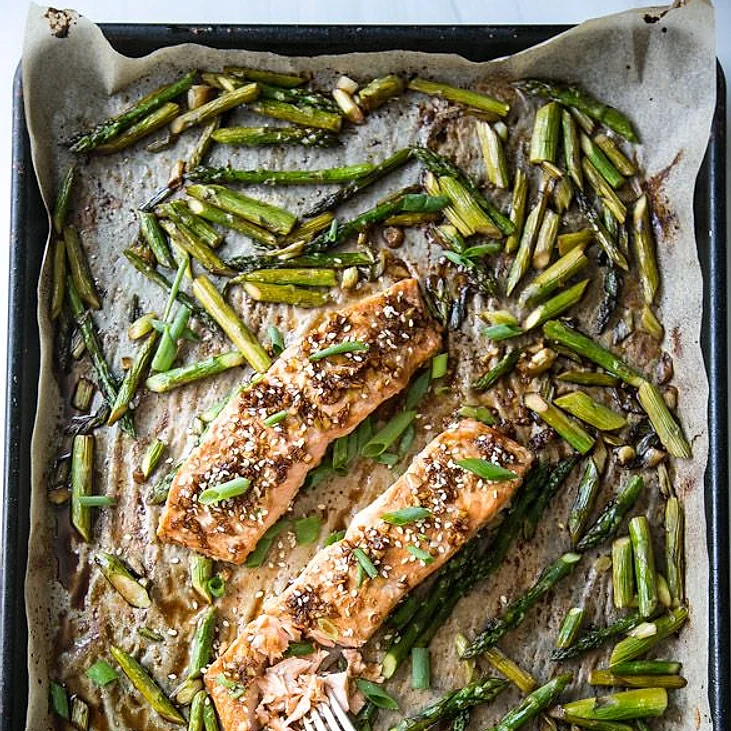
5. Bake for 10 to 12 minutes, until the salmon turns opaque and flakes easily at the thickest point and the asparagus is bright green and starting to brown at the tips.
6. Brush the reserved sauce over the salmon and bake for another 3 to 4 minutes, until the glaze looks thick, shiny, and slightly bubbly around the edges.
7. Scatter the green scallion tops and sesame seeds over everything. Serve straight from the pan with rice on the side, if you like.
 Recipe byCourtney Blake
Baked Gluten-Free Teriyaki Salmon and Asparagus
Ingredients
- 1/2 cup gluten-free tamari or soy sauce
- 1/4 cup maple syrup or honey
- 1/4 cup unseasoned rice vinegar
- 2 large garlic cloves, minced
- 2 inches fresh ginger, minced
- Four 6-ounce salmon fillets
- 1 bunch asparagus, trimmed and cut into 2-inch pieces
- 1 bunch scallions, white and green parts separated, thinly sliced
- 1 tablespoon toasted sesame oil
- Sea salt
- Sesame seeds, for garnish
Instructions
- Preheat the oven to 400°F and line a large rimmed sheet pan with parchment paper.
- Whisk the tamari, maple syrup, rice vinegar, garlic, and ginger in a small bowl.
- Set aside about one third of the sauce in a separate bowl for glazing later.
- Place the salmon fillets on one side of the pan and season lightly with sea salt. Spoon the remaining sauce over the fillets.
- Toss the asparagus and white scallion parts with the sesame oil and a pinch of sea salt, then spread them on the other side of the pan in a single layer.
- Bake for 10 to 12 minutes, until the salmon flakes easily and the asparagus is bright green with browned tips.
- Brush the reserved sauce over the salmon and bake for 3 to 4 more minutes until glossy.
- Scatter the green scallion tops and sesame seeds over everything and serve.
Notes
- Use tamari or a certified gluten-free soy sauce for a gluten-free meal.
- Salmon is done at 145°F internal temperature; it should flake easily.
- Frozen asparagus can be used without thawing; add about 3 minutes to the bake time.